The regional marking is therefore not about distance from home. It is about experience. It helps an angler see the real fishing problem that shaped the rod—and decide whether that problem looks like the water they know best.
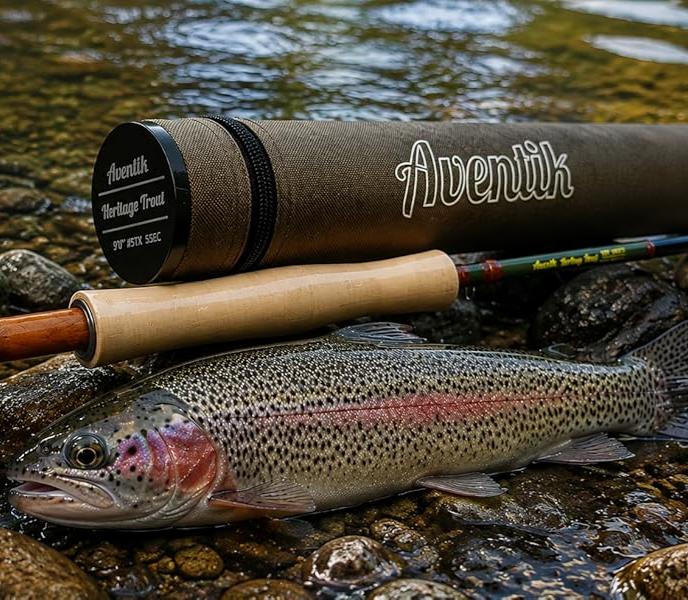
The HeritageTrout respects the enduring spirit of trout fishing—natural water, thoughtful power, and the promise of the next river bend—but its development environment is very specific. According to the product page, the series was developed by the Chief Designer of BTI OUTDOOR INC. for the large Western rivers of Montana and Colorado.
Big Western water is not always forgiving. Canyon wind can disrupt a loop. Strong wild trout can test the rod’s reserve power. Heavier streamers and hopper-dropper combinations can make line control and energy transfer more demanding. HeritageTrout answers those conditions with a high-modulus carbon blank reinforced by an X-Cross structure, including a reinforced butt and mid-section intended to improve horizontal strength and crack resistance while retaining a lightweight, fast-action response.
Its redesigned Power Taper is another part of that water-specific logic. Aventik positions it to form tight loops in heavy canyon winds and to handle heavier streamers and complex hopper-dropper rigs across expansive river systems. In practical terms, HeritageTrout is not simply about casting farther. It is about keeping the cast controlled when wind, current, and fly choice become less predictable.
The series offers specialized configurations from 8'6'' 4wt through 9' 6wt, so anglers can choose the length and line weight that best match their home water and fishing style. The 9' 5wt five-piece version carries the exclusive 2-in-1 feature listed on the product page, and every rod includes an Aventik Cordura hard tube with a zippered cap for backcountry hiking and air travel.
Genuine U.S. Pac Bay advanced ceramic stripping guides, hard chrome-plated snake guides, and an extra-large tip-top support smooth line flow and energy transfer. An AAA+ Portuguese cork handle and natural burl wood reel seat complete the rod with a secure, heritage-inspired feel in hand.
The HeritageTrout regional marking points to field-validated strength, wind control, and adaptability for the big rivers of Montana and Colorado.
Influencer Presentation:
https://www.instagram.com/p/DYdL7pbhOZs/
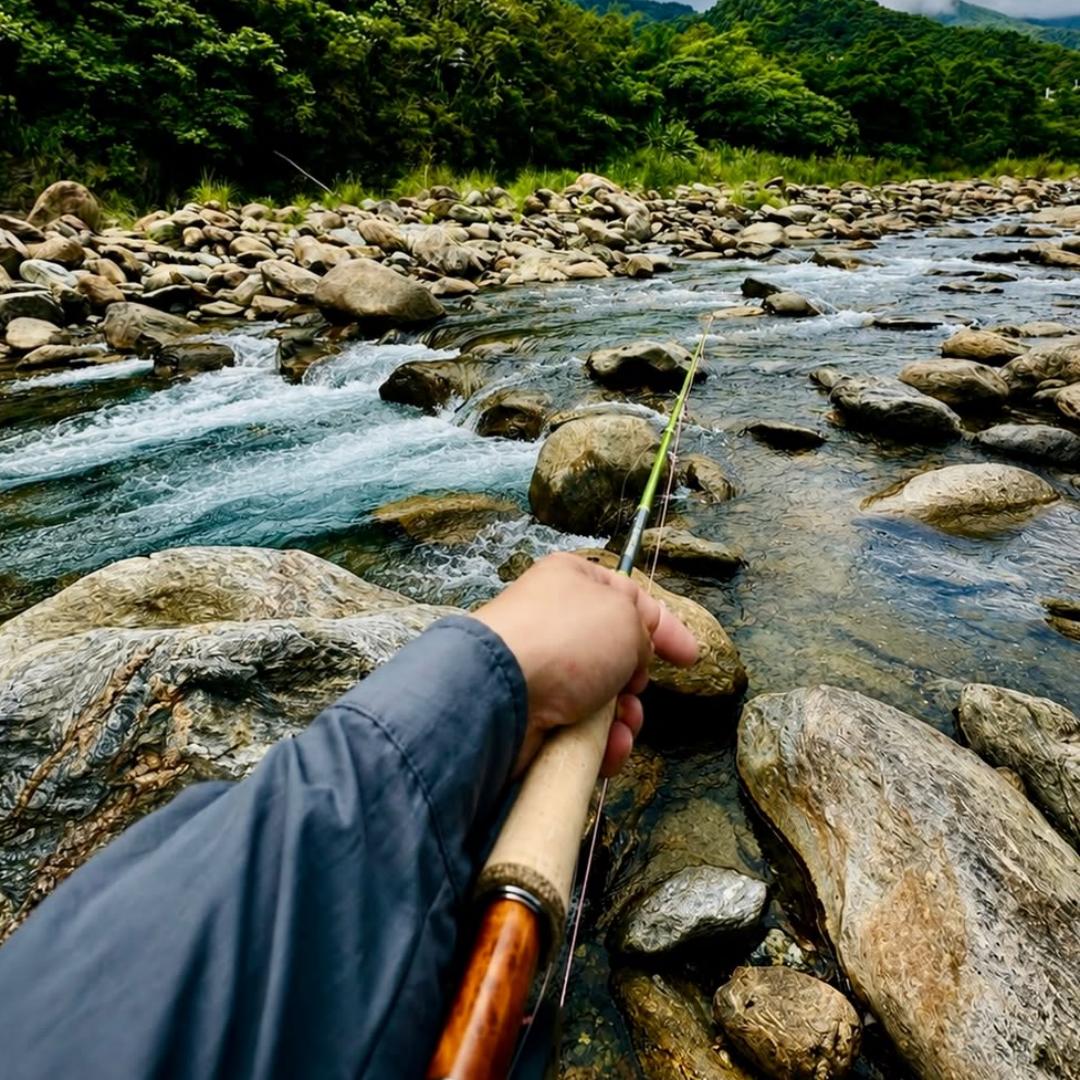
If HeritageTrout begins with the power and scale of large Western rivers, Spring Creek begins in an entirely different world: the limestone spring creeks of Wisconsin and Minnesota’s Driftless Area. Aventik states that the rod was developed by the Chief Designer of BTI OUTDOOR INC., with 20 years of R&D experience, specifically for these technical, crystal-clear waters and their wary wild trout.
That is the meaning behind its name. In clear spring-fed water, trout have more time to see an angler’s approach, inspect the line, and notice the way a dry fly reaches the surface. On narrow streams hemmed in by vegetation, the challenge is not necessarily casting farther. It is making a clean short-to-medium-distance cast, controlling the line, and delivering the fly with a quiet, natural touch.
Field testing in this type of water informed the Spring Creek’s 46T high-modulus carbon blank and X-Cross reinforcement. The product page describes the construction as supporting horizontal strength, torsional stability, a lightweight feel, and exceptionally fast recovery. Its fast-action profile is optimized for technical short-to-medium-distance casting and for dry-fly presentations that minimize surface disturbance—not for distance alone.
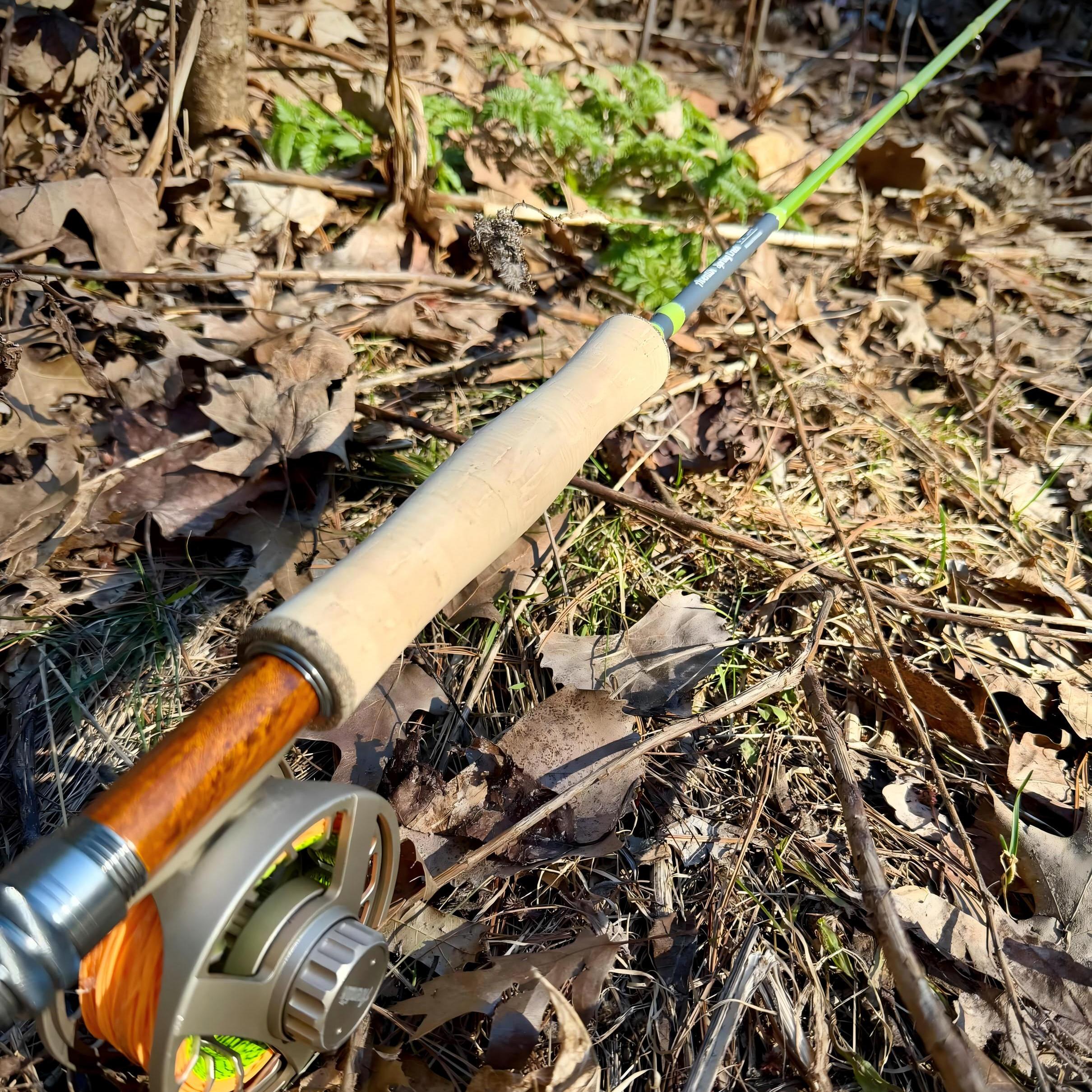
The component package follows the same purpose. Genuine Pac Bay guides, a titanium stripping guide, and an enlarged tip-top are specified for smooth line management. An AAA+ Portuguese cork handle and natural burl wood reel seat provide a comfortable, classic connection point for long, attentive hours on the water. The four-piece rod also includes an additional spare tip section, helping an accidental break become a manageable interruption rather than the end of a remote fishing day.
The Spring Creek regional marking comes from the field-tested realities of Driftless spring water: clear currents, wary trout, and presentations quiet enough to belong there.
Shared Foundation, Different Fishing Priorities
HeritageTrout and Spring Creek have important common ground. Both use high-modulus carbon construction, X-Cross reinforcement concepts, fast action, and Pac Bay guides. Both are intended for anglers who care about timing, line control, and the quality of a trout presentation.
Their difference lies in what they prioritize.
HeritageTrout is built around the larger environmental variables of big Western river fishing: wind, broader water, powerful fish, and heavier fly combinations. It is the natural fit for anglers looking for reserve power, tight-loop control, and travel-ready protection in those conditions.
Spring Creek is built around clear, narrow water with less margin for error. When fish are alert, space is limited, and every landing needs to be lighter and more precise, its short-to-medium-distance technical focus becomes the point.
Neither rod is “better” in the abstract. The useful question is this: Does your home water ask you to carry a tighter loop through the wind, or to lay a dry fly down with less disturbance?
Choose the Water You Know Best
If your usual fishing resembles big Western river conditions—or calls for dependable control in wind, with streamers, hopper-dropper rigs, and strong wild trout—explore the Aventik HeritageTrout Fly Fishing Rod.
The regional water marked on each rod represents more than a destination. It represents the real wind, current, fish, and casting problems that informed its field-tested design. HeritageTrout and Spring Creek are two distinct answers to two distinct kinds of trout water—so you can choose the one that feels most at home where you fish.